Exploring China Top Traditional Dress Styles and Their Cultural Significance?
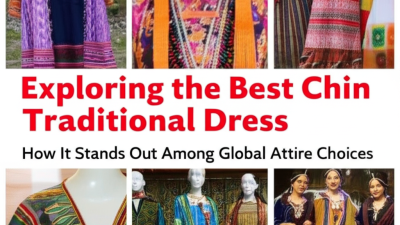
China boasts a rich tapestry of traditional dress styles, each with profound cultural significance. Chin Traditional Dress encapsulates the essence of Chinese heritage. These garments are not merely clothing; they tell stories of history, identity, and artistry.
Different regions in China offer unique styles, reflecting local culture and customs. The Hanfu, with its flowing sleeves, symbolizes grace and elegance. Meanwhile, the Qipao highlights femininity and sophistication. Such variations illustrate the diversity within China's cultural landscape.
However, as globalization influences fashion, preserving these traditional styles becomes a challenge. Many younger generations may overlook their heritage. This trend raises important questions about cultural continuity. Despite these concerns, the beauty and meaning of Chin Traditional Dress continue to inspire both admiration and curiosity. Embracing this heritage can strengthen one’s identity and promote appreciation for diversity in dress.
Exploring the Historical Roots of China's Traditional Dress Styles
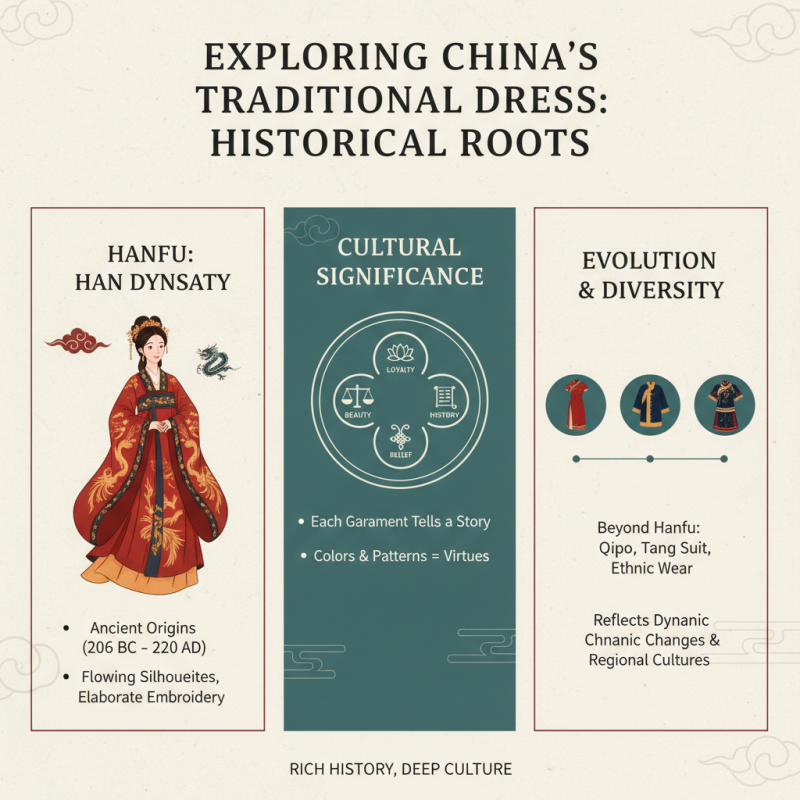
China's traditional dress styles reflect a rich tapestry of history and culture. Each garment tells a story, rooted in ancient customs and beliefs. The Hanfu, for instance, dates back to the Han dynasty. Its flowing lines and elaborate designs showcase the aesthetic values of that era. The colors and patterns often symbolize different qualities, such as loyalty or beauty.
The Qipao emerged in the Qing dynasty. This figure-hugging dress highlights the female form and represents societal changes. Its evolution mirrors shifts in women's roles in China, combining tradition with modernity. The intricate embroidery and choices of fabric add depth to its significance.
Tips for exploring these traditional styles: Pay attention to fabric choices. Silk is often favored for its luxurious feel and historical relevance. When attending a cultural event, consider wearing authentic styles. This not only shows respect but also enhances your understanding of the culture. Always keep in mind the historical context while appreciating the designs. Understanding these roots can provide a more meaningful experience.
Key Features and Characteristics of Major Traditional Chinese Garments
Traditional Chinese garments showcase a rich tapestry of culture and history. The Hanfu, recognized by its flowing lines and elegant draping, reflects a deep respect for tradition. Its long sleeves and wide waistbands allowed freedom of movement, embodying grace. This design is not just stylish but also represents Confucian values of modesty and virtue.
Another significant style is the Qipao, or Cheongsam. This form-fitting dress highlights the female silhouette with high slits and a mandarin collar. Originating in the 1920s, it symbolizes modernization while maintaining cultural roots. The intricate embroidery often depicts nature, conveying harmony with the environment. However, its tight fit may not be practical for all occasions.
The Tang Suit is another prominent outfit, often worn during festive celebrations. It features bold colors and ornate patterns, illustrating the wearer's social status. While visually striking, it can sometimes appear heavy and cumbersome. Each garment reflects a blend of aesthetics and functionality, illustrating how fashion can convey identity and history in a meaningful way.
Exploring China Top Traditional Dress Styles and Their Cultural Significance
| Dress Style |
Key Features |
Cultural Significance |
| Hanfu |
Loose-fitting, layered clothing, often with long sleeves |
Symbolizes Confucian values and ancient Chinese heritage |
| Qipao (Cheongsam) |
Form-fitting, high collar, with a side slit |
Represents femininity and modern Chinese identity |
| Tang Suit |
Jacket with a straight collar, often embellished with traditional motifs |
A blend of Eastern and Western styles, representing cultural fusion |
| Miao Dress |
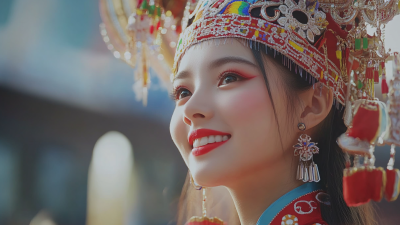
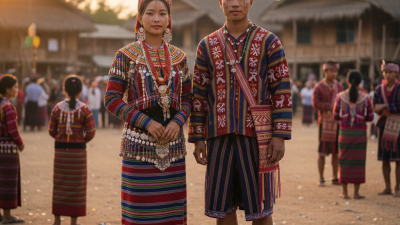
Richly embroidered, often with silver accessories and bright colors |
Exemplifies the cultural diversity of the Miao ethnic group |
| Ba Ba (Men’s Traditional Wear) |
Simple yet elegant, typically features a wrap-around style |
Represents traditional masculinity and historical Chinese attire |
Cultural Significance of Silk in Chinese Traditional Clothing Practices
Silk has a profound role in Chinese traditional attire. Its luxurious texture and vibrant colors have made it a symbol of status and elegance for centuries. Worn by emperors, nobles, and common people, silk signifies wealth and cultural heritage. The intricate processes of silk production reflect ancient craftsmanship and artistry. This rich material contributes to the unique aesthetics of various traditional dress styles.
When selecting silk garments, it’s important to consider the occasion. For weddings and festivals, bright colors and elaborate patterns are common. Daily wear may lean towards more subtle hues. The choice of silk type, such as satin or charmeuse, also impacts comfort and drape.
Tips: Always check the quality of silk before purchasing. Authentic silk feels smooth and cool to the touch. Keep in mind that silk requires gentle washing to preserve its charm and longevity. Delicate care ensures that your piece remains a lasting part of your wardrobe.
Choosing silk can be a delightful experience. Yet, it often comes with a cost. Some may find the price prohibitive. Understanding the value of silk is key. It's about more than just fashion; it’s a connection to history. Embrace the stories woven into every fiber.
Exploring China Top Traditional Dress Styles and Their Cultural Significance
This bar chart represents the cultural significance of various traditional Chinese dress styles, providing a visual interpretation of their importance. Each score reflects the cultural impact and historical relevance of the dress styles in Chinese society.
Regional Variations in Traditional Chinese Dress: A Comparative Study
China's traditional dress styles, rich in heritage and variety, reflect the country’s diverse cultures. Regional variations in attire offer insight into local customs and traditions. For example, the Hanfu from the Han dynasty emphasizes flowing lines and intricate details, while the Qipao showcases a more modern silhouette, characterized by its form-fitting style and high slit, popular in urban areas today. According to a 2022 survey by the Chinese Fashion Association, about 60% of respondents feel a deeper connection to their culture through traditional clothing.
In the north, Mongolian clothing features vibrant colors and robust designs, suitable for the colder climate. Conversely, the southern regions favor lighter fabrics and more intricate embroidery, as seen in the Miao people's outfits. Reports indicate that regional styles often have hidden meanings, like colors representing family lineage. However, the revival of traditional dress poses challenges. Young people may prioritize Western fashion, leading to a potential loss of these cultural symbols. In 2023, the China Cultural Heritage Protection Report noted a 30% decline in traditional dress awareness among urban youth, emphasizing the need for educational efforts to bridge this gap.
The Evolution of Chinese Fashion: From Imperial Times to Modern Trends
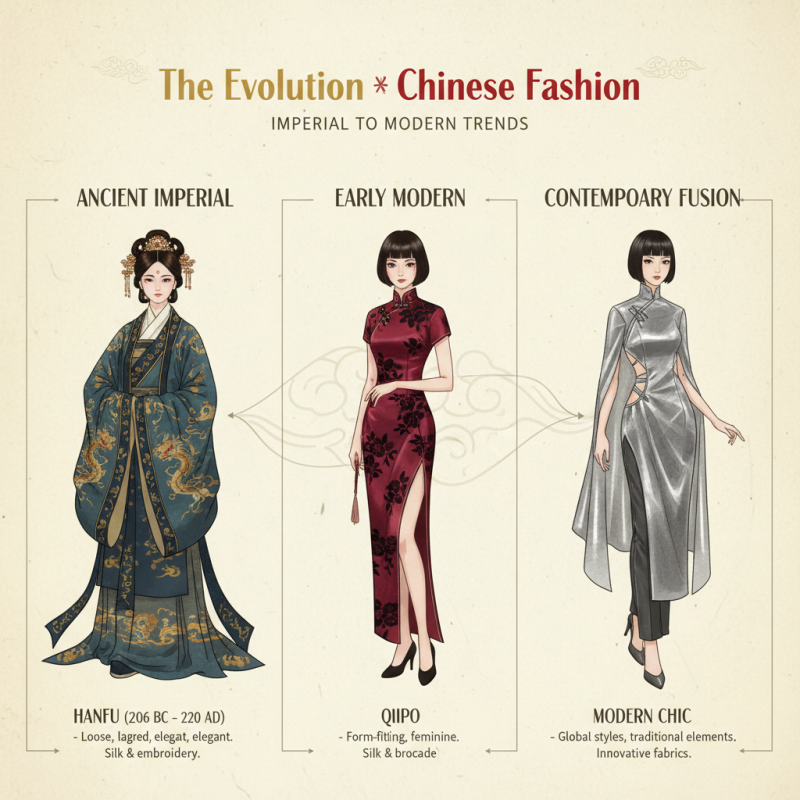
Chinese fashion has a rich tapestry, woven through centuries. The evolution of traditional attire reflects shifts in society, politics, and culture. Historical reports suggest that the Hanfu, for instance, dates back to the Han dynasty (206 BC - 220 AD). It is characterized by flowing lines and layered fabrics, emphasizing elegance and grace. In contrast, the Qipao gained prominence in the 1920s. This figure-hugging dress represents modern femininity and has undergone various adaptations over the decades.
Statistics indicate that over 60% of young adults in urban China are interested in traditional attire, blending it with contemporary styles. This fascination highlights a cultural revival. Yet, there's a challenge. The rapid globalization of fashion often overshadows traditional garments. Young designers face the dilemma of maintaining cultural integrity while appealing to modern tastes. Some designs risk becoming mere costumes rather than expressions of heritage. The need to balance tradition with innovation is crucial for the future of Chinese fashion.
Cultural significance is often lost in translation. Many contemporary outfits borrow elements from historical styles but may not connect with their origins. Understanding these nuances is vital for preserving this rich tradition. Observing patterns in fashion shows reveals a yearning for authenticity. The interplay of tradition and modernity continues to shape Chinese fashion, inviting both admiration and reflection.